
Global Debt Syllabus 2019
Unit 1: Ties that Bind: Debt, Money, and Capitalism
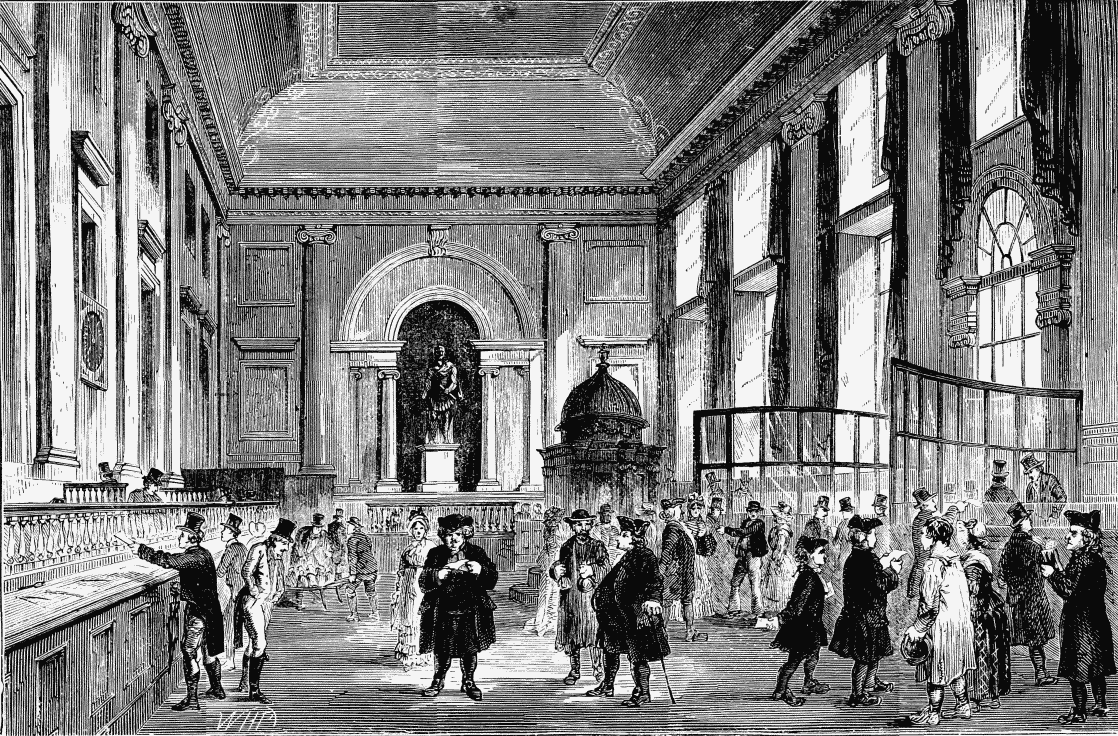
Capitalism is built on the concept and practice of money: profitmaking and economic growth are driving processes based on money making more money. Monetary transactions and associated investment-related debt regulate capitalist production and distribution to satisfy our daily needs and wants. Money is also the tool and symbol of politico-economic power within capitalism.
Key Questions
How does debt differ in capitalist and non-capitalist contexts?
What kinds of non-capitalist debt persist within capitalist economies?
How can we understand money better by grounding our analyses in relations of debt?
Texts
Margaret Atwood Payback: Debt and the Shadow Side of Wealth (CNC Massey Lecture) (Toronto: House of Anasi Press, 2008).
Harry Cleaver, Rupturing the Dialectic: The Struggle against Work, Money, and Financialization (Chico (CA) and Edinburgh: AK Press, 2017).
Geoffrey Ingham, ‘The development of capitalist credit-money’ in his The Nature of Money (Cambridge: Polity Press, 2004), pp. 107–133.
Karl Polanyi, The Great Transformation: The Political and Economic Origins of Our Time. (Boston: Beacon Press, 2001 [1944]).
Paul Mattick, Business as Usual: The Economic Crisis and the Failure of Capitalism. London: Reaktion Books, 2011).
Primary Sources and Multimedia
Committee for the Abolition of Illegitimate Debt, http://www.cadtm.org
Steve Keen, Debtwatch: Analysing the Collapse of the Global Debt Bubble,https://www.debtdeflation.com/blogs/
Bruce Petty Money (Sydney: Big Ears Productions, 1988). [Short film by Academy Award winning animator]
Petty’s Money Book. (Sydney Collins, 1983). [Out of print; hard to get? book by political cartoonist
Unit 2: Going Global: Debt and Empire
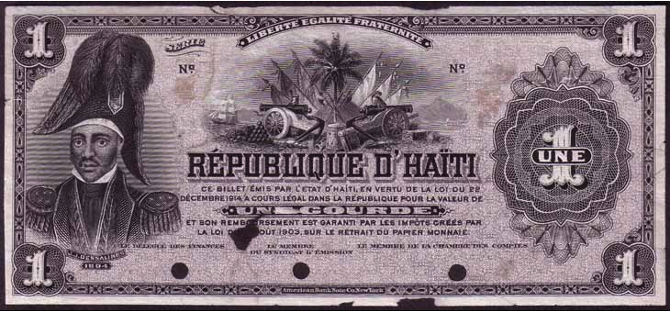
This unit focused on the dialectic between the extension of credit and the extension of territory, to ponder the enduring ties between governments and markets. As colonial regimes expanded beyond national borders, they sought to privatize countless commons across the globe, transforming immobilized goods and heirloom treasures such as land into mobile goods that could be securitized and traded. Once securitized and tradeable, they also needed extensive defense—both legal and coercive— from newly installed sovereigns.
Key Questions
What is the historical and contemporary relationship between debt and empire?
How did capitalist systems of debt and finance emerge through colonial conquest, the Transatlantic slave trade, and other forms of state coercion and unfree labor?
What role has debt played as a tool in colonial governance and in neo-colonial governance?
Texts
Edward E. Baptist, The Half Has Never Been Told: Slavery and the Making of American Capitalism, pp. 243-259. (Basic Books, 2014).
Patrick Brantlinger, Fictions of State, Chapter 1: “Debt, Fetishism and Empire.” (Cornell University Press, 1996).
Peter James Hudson, Banker and Empire: How Wall Street Colonized the Caribbean, Chapter 3: “Financial Occupations.” (University of Chicago Press, 2017).
Liliana Orbregon, “Empire, Racial Capitalism and International Law: The Case of Manumitted Haiti and the Recognition Debtm” Leiden Journal of International Law, 2018, 31: 597-615.
Yanis Varoufakis, Adults in the Room: My Battle With Europe’s Deep Establishment, pp. 162-179 (London and New York: Random House, 2017).
Primary Sources
Louisiana Purchase, https://www.archives.gov/exhibits/american_originals/louistxt.html
William Cobbett, “Paper Aristocracy” (scroll down and click on “Paper Aristocracy”https://oll.libertyfund.org/titles/cobbett-selections-from-cobbetts-political-works-vol-1
Multimedia
Stephanie Black, Life and Debt,http://www.lifeanddebt.org
NYC Banks and Latin America in the 80s, https://tvnews-vanderbilt-edu.libproxy.newschool.edu/broadcasts/537695?
https://tvnews-vanderbilt-edu.libproxy.newschool.edu/broadcasts/536261?
OddLots Podcast on Odious Debt: https://www.bloomberg.com/news/audio/2019-01-18/the-1mdb-scandal-and-the-nature-of-debt-podcast
Unit 3: Prisons and Peonage: The Currents and Containments of Global Debt and Labor

This unit explores the intimate relationship between indebtedness and freedom of movement. How can one truly be free if they are bound in a relationship of owing? Historically how have people leased away their lives and the lives of others? Sometimes, as in the case of the institution of indenture, a form of debt peonage, indebtedness can project a human body into an entirely new space, only to find themselves desperately confined upon arrival; other times–as with early American colonial debtors–people could “substitute distance for discharge,” moving from one jurisdiction where their debt was registered to another one that would free them of their debts. Conversely, debtors’ prisons represent the most lucid connection between indebtedness and radically circumscribed freedom, as attested to (in retrospect, offensively) by the extensive comparisons between imprisonment for debt and racial slavery during the era of their mutual abolition (see also Keteltas’ modification of a then-famous abolitionist medallion) in the West.
Key Questions
How and when does the human body become accepted as collateral in debt contracts? What moral, philosophical, and legal underpinnings are necessary for this to occur?What modes of political and economic engagement emerge to contest a system that equates human bodies with transferrable economic value?
Texts
Silvia Federici, Caliban and the Witch, pp. 100-115 (Autonomedia, 2004).
Margot Finn, Character of Credit, Chapter 4: “Discipline or Abolish? Reforming Imprisonment for Debt,” pp. 152-193 (Cambridge University Press, 2003).
Michael Hudson, And Forgive Them Their Debts: Lending, Foreclosure, and Redemption from Bronze Age Finance to the Jubilee Year, (Islet-Verlag Dresen, 2018).
Bruce H. Mann, Republic of Debtors, Chapter 4: “The Imagery of Insolvency,” pp. 109-146 (Harvard University Press, 2009).
Gustav Peebles, “Washing Away the Sins of Debt: The Nineteenth-Century Eradication of the Debtors’ Prison,” Comparative Studies in Society and History 55 (3): 701-724.
Primary Sources
AJ Duffield, Peru in the Age of Guano (1877)
Lalbihari Sharma, I Even Regret Night: Holi Songs of Demerara (Kaya Press) translated by Rajiv Mohabir (originally published 1916 – March 2019)
De Tocqueville’s Prison reports from his visit to USA, combined with his commentaries on slavery and Native Americans as well. Appendix, “Imprisonment for Debt,” 182-84. Forlorn Hope, Keteltas’ newspaper from the NYC debtors’ prison: http://digitalcollections.nyhistory.org/islandora/object/islandora:15681
http://link.library.umkc.edu/portal/Forlorn-hope-electronic-resource/MmQsbb0nycM/
Qatar: The Dark Side of Migration (Amnesty International)
Multimedia
Martin Brest, Midnight Run (1988)
Lucas Moodysson, Lilya Forever (film)
“Why Does the US Still Have Debtor’s Prisons” BBC, https://youtu.be/Jm_zhRI2tLo
Zachary Mider, Zeke Faux, “Confessions of a Judgment Millionaire” Bloomberg, November 28, 2018. https://www.bloomberg.com/graphics/2018-confessions-of-judgment-millionaire-marshal/
Unit 4: Racialized Debts

The unit explores how social difference brokers access to capital. It also explores the way economic and political inequalities index the value of life. Together, these texts consider the role of secularism in creating a world in which monetary value displaces religious frameworks for social belonging and the profile of a person or polity comes to serve as a forensic profile as well as a credit profile. In taking an intersectional approach. “Racialized debt” traces how people decide who owes what to whom and examines how people use rituals to establish who is authorized to represent them in trade agreements and political compacts.
Key questions:
What is the relationship between social difference (race, gender, sexuality, geography, expertise, and ability) and the historicity of capital?
How does social difference shape how we understand the value of property, currency, and life?
How do people decide who owes what to whom?
Texts
Author Unknown. 1979. “Neo-Marxism and the Bogus Theory of ‘Racial Capitalism.’” Ikwezi: A Black Liberation Journal of South African and Southern African Political Analysis.
Sir Hilary Beckles. 2013. Britain’s Black Debt.
Oliver Cox. 1948. Caste, Class, and Race.
Cheryl Harris. 1993. “Whiteness as Property.” Harvard Law Review 1707
Eric Williams. 1944. Capitalism and Slavery.
Primary Sources
Olaudah Equiano. 1789. The Interesting Narrative of the Life of Olaudah Equiano, written by Himself.
Frederick Douglass. 1845. A Narrative of the Life of Frederick Douglass.
Hannah Crafts. The Bondwoman’s Narrative.
Multimedia
Ousmane Sembene, dir. 1988. Camp de Thiaroye [film].
Unit 5: Debt for Life: Finance Capitalism and Neoliberalism
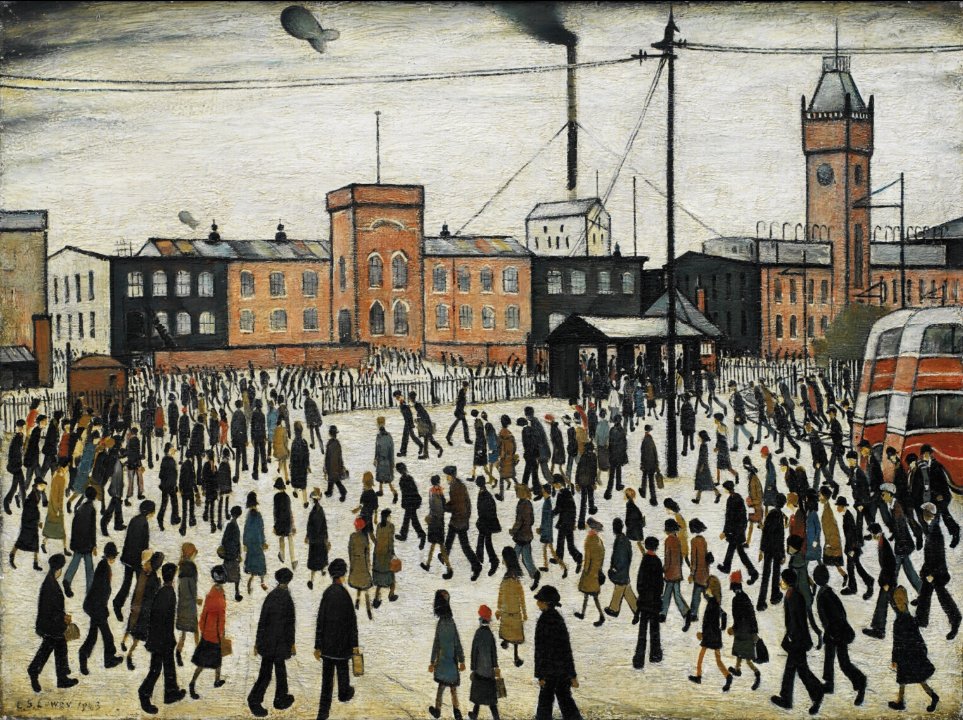
This unit examines the logic of capital in the neoliberal era. Over the last five decades, finance capital has become the hegemonic form of capital in the global economy. This shift has had significant consequences to the process of capital accumulation and global governance.
Key questions
What role does debt play in the contemporary era of finance capitalism/neoliberalism? How does finance capitalism produce political asymmetries reminiscent of and continuous with those of colonial empires?
How is the contemporary global political economy shaped by the debt-driven movement of capital?
Texts
Ferenc Hammer, Léna Pellandini-Simányi, and Zsuzsanna Vargha. “The Financialization of Everyday Life or the Domestication of Finance? How Mortgages Engage with Borrowers’ Temporal Horizons, Relationships and Rationality in Hungary.” Cultural Studies 29(5–6): 733–59, 2015.
Rodrigo Fernandez and Angela Wigger, “Lehman Brothers in the Dutch Offshore Financial Center: The Role of Shadow Banking in Increasing Leverage and Facilitating Debt,” Economy and Society 45:3-4, 407-430, 2016.
Melissa García‐Lamarca and Maria Kaika. “‘Mortgaged lives’: the biopolitics of debt and housing financialisation.” Transactions of the Institute of British Geographers 41(3): 313-327, 2016.
Greta R Krippner, Capitalizing on Crisis: The Political Origins of the Rise of Finance. (Cambridge, MA: Harvard University Press, 2011).
Theodors Rakopolous, The Global Life of Austerity: Comparing Beyond Europe, (New York: Berghahn, 2018).
Primary Sources:
Charles Dolph, “The second time as farce? The IMF returns to Argentina,” FocaalBlog,https://www.focaalblog.com/tag/charles-dolph/ June 2018.
Multimedia
http://www.oecd.org/daf/fin/public-debt/oecdsovereignborrowingoutlook.htm
https://www.cia.gov/library/readingroom/search/site/debt
Unit 6: The Worst the Better: Disaster Capitalism
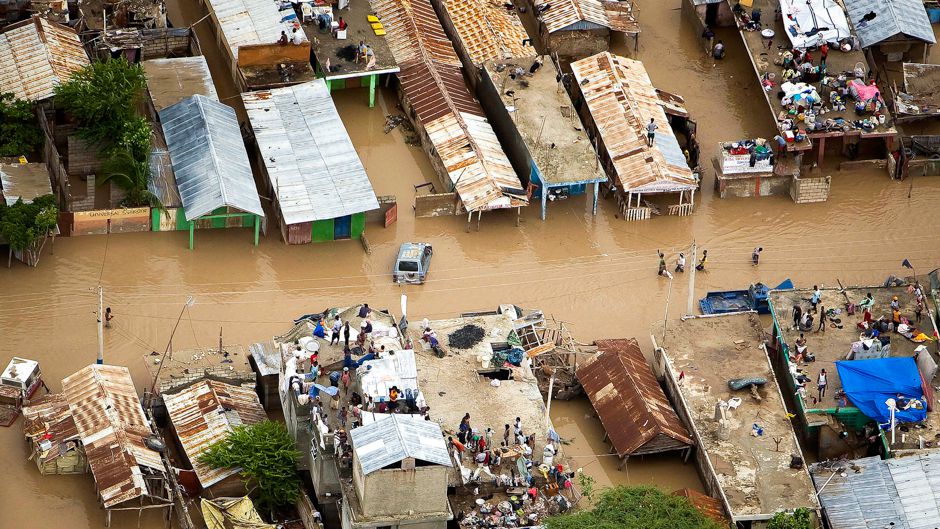
This unit explores the practice of states, governments, and capital of taking advantage of environmental and other disastersto enforce liberal economic policies that communities would be less likely to accept under normal circumstances. The unit also examines the ways that capitalism both exacerbates and derives enormous profit from environmental and other crisis that directly affects human life.
Key Questions
How does indebtedness exacerbate and contribute to environmental vulnerabilities and injustices?
How does disaster capitalism contribute to indebtedness and the unequal processes of financialization?
What role does debt play in issues of food and water security and in the projected near future of calamitous climate change?
Texts
Laura Bear, Navigating Austerity: Currents of Debt along a South Asian River. (Stanford, CA: Stanford University Press 2015).
McKenzie Funk, Windfall: The Booming Business of Global Warming. (New York: Penguin Books: 2014).
Gökçe Günel, Spaceship in the Desert: Energy, Climate Change, and Urban Design in Abu Dhabi. Duke University Press, 2019).
Donald MacKenzie, “Making Things the Same: Gases, Emissions Rights and the Politics of Carbon Markets.” Accounting, Organizations and Society, 2008. 34 (3–4): 440–55. Jason W. Moore (ed), Anthropocene or Capitalocene?: Nature, History, and the Crisis of Capitalism. (Oakland, CA: PM Press, 2016).
Joshua Reno, “Motivated markets: instruments and ideologies of clean energy in the United Kingdom.” Cultural Anthropology, 2011. 26 (3), 389-413.
 UNPAYABLE DEBT: GLOBAL SYLLABUS 2019